Chandrayaan-3, started its journey to the Moon from Sriharikota’s second launch pad, has successfully landed on Moon’s surface. This is a remarkable moment for India, as it is the only country to land on the Moon’s south pole. Now Vikram Lander, the landing module will release the Pragyan Rover which will find water and analyse the chemical composition on the Moon's surface in a lunar day. However, Chandrayaan-3 had to face a lot of challenges in making this possible.
3 challenges Chandrayaan-3 had to faceThe Moon’s south pole is an area which witnesses perpetual darkness for billions of years and even the temperatures here are way too extreme. Prior to Chandrayaan 3, four other international attempts to land on the moon's lunar surface had failed. This included Russia's Luna-25 spacecraft, Chandrayaan 2, a Japanese and an Israeli non-profit attendant. They failed just a few minutes prior to their landing.
Also read: Chandrayaan-3 Lunar Mission: ISRO releases images of the Lunar far side captured by LHDAC
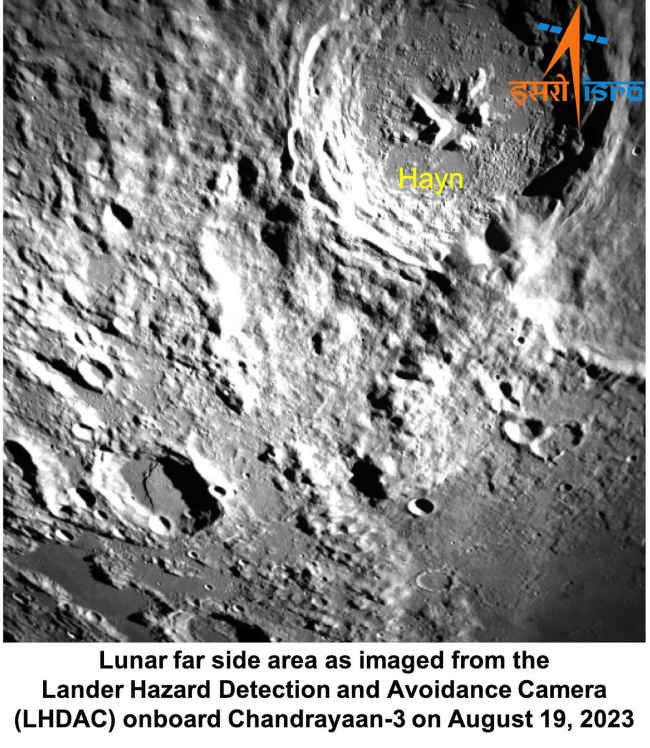
The moon’s surface is not flat and stable and witnesses many moonquakes. This has caused the moon’s surface to have lobate scarps. According to a research by The Physical Research Laboratory, which is a National Research Institute for Space and allied sciences, supported by Department of Space, Government of India and headquartered in Ahmedabad, Gujarat, a ~58 km long segment of lobate scarp situated at an average horizontal distance of ~6 km in the west of the proposed primary landing site”. This could have caused a major issue during Chandrayaan 3’s landing.
Also read: Chandrayaan-3: Where and how to watch historic ISRO moon landing
The landing site identified for Chandrayaan-3 had two major scraps close to it and as mentioned earlier, moonquakes are common in the area. According to research studies the 58-km long segment of Scrap 1 has been “seismically active recently”. This could have caused ground shaking likely related to the movements along lobate scarps. This would have further led to boulder-falls and landslides obstructing the landing.
from General News https://ift.tt/GSLohD2
Comments
Post a Comment