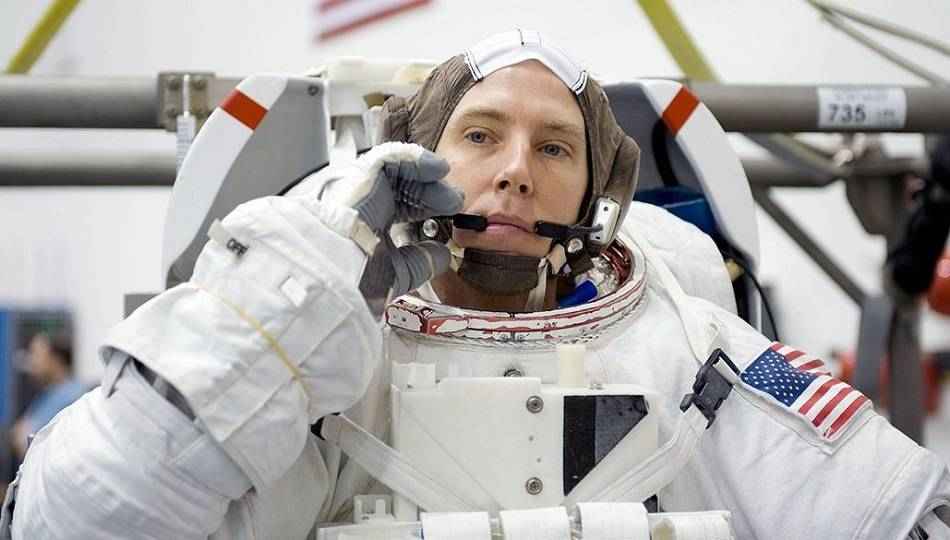
 We all know space can have various effects on an astronaut’s body, but to actually witness them is something else altogether. NASA astronaut Andrew Feustel recently posted a video in which he’s seen relearning to walk after his return from a six-month voyage in space. All those months of microgravity have clearly had an effect on his motor skills. In the video he’s seen teetering across the floor with his eyes closed to regain his sense of balance. “On October 5th this is what I looked like walking heel-toe eyes closed after 197 days on @Space_Station during the Field Test experiment...I hope the newly returned crew feels a lot better,” Feustal wrote on Twitter, along with the video taken by his wife, Indira Feustel. Andrew Feustel went aboard the International Space Station as part of Expedition 55/56 on March 21 and returned to Earth on October 4. He performed his duties initially as Flight Engineer and then as Commander of the International Space Station. During his stay in space, he undertook three spacewalks to perform maintenance and upgrades on the space station. With only microgravity available in space, astronauts aboard the rapidly orbiting space station are in a constant state of free fall. As a result, there’s no definite ‘up’ or ‘down’. This means astronauts don’t necessarily lie down on a bed to sleep the way do on Earth. Nor do they use the floor to walk; they simply propel themselves around with the help of surrounding walls and objects. This causes human muscles to ‘forget’ how to work. For this reason, walking has to be relearnt once the astronauts are back on Earth. Though astronauts aboard the International Space Station do their best to keep fit and active by exercising regularly, the constant floating around takes a toll on their muscles. The video shared by Andrew Feustel reminds us that astronauts have to go through a lot in the name of science. Scientists are currently studying the effects of long-term voyages in space so we can soon attempt manned missions to neighbouring planets like Mars. Cover image courtesy: NASA
from Latest Technology News http://bit.ly/2rZBGmn
Comments
Post a Comment